
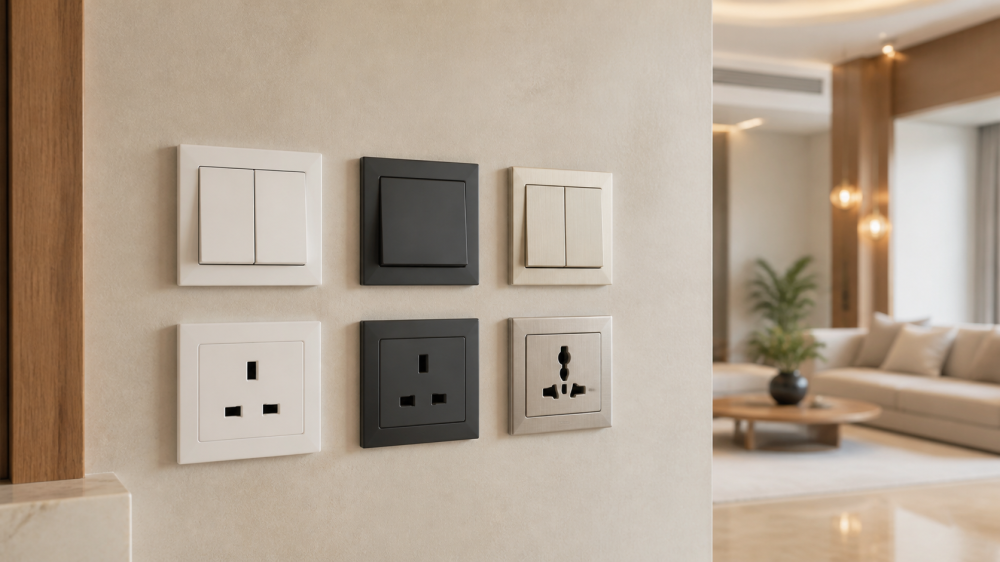
Quick answer: choose the function before the finish
The right electrical switches and sockets are not simply the ones that match the wall colour. Start with the appliance or lighting function, the room, the published voltage and current rating, earthing needs, and the required wall box. Then check that every module, frame, and accessory belongs to a compatible series. Appearance matters, but only after these practical checks.
For a straightforward starting point, review the available 🔗 electrical switches and sockets for homes and projects at tirtk, then compare each item by its published specification rather than by colour or product name alone. Final selection and installation should be confirmed by a qualified electrician who can assess the actual circuit and site conditions.
• Identify what will be controlled or connected.
• Match the product rating to the intended use and circuit design.
• Confirm earthing and safety features where required.
• Check the wall box, cutout, frame, and series compatibility.
• Choose the finish only after the technical requirements are clear.
What do switches, sockets, and plugs actually mean?
A plug is not the same as a wall socket
Everyday language sometimes uses “plug” for both parts, but the distinction helps when comparing products. A plug is normally attached to an appliance cable and enters a socket-outlet. The socket is the fixed wall point that supplies power. This matters because a feature published for a plug should not automatically be attributed to the wall socket, and vice versa.
Gang and way describe different things
A switch can have one or several rockers on a faceplate. This is commonly described by the number of gangs, meaning how many loads or groups are controlled from that plate. “One-way” and “two-way” describe the control arrangement, not the number of buttons. A two-way arrangement can control the same light from two locations, but it must be designed and installed correctly for that purpose.
Common types of electrical switches and sockets
Grounded 13A socket-outlets
A three-pin grounded socket is common for household and similar use in Saudi Arabia. A published 13A rating is an important limit, not a promise that every appliance is suitable. The appliance instructions, circuit protection, cable size, connection quality, and operating conditions still matter. Never treat the printed current rating as permission to overload a circuit or use unsuitable adapters.
Switched, single, and multiple socket arrangements
A socket may be supplied with or without a local switch, while a faceplate may provide one or more outlets. A switched socket can make local isolation convenient for suitable equipment, but it does not replace the protective devices or isolation arrangements required by the electrical design. Multiple outlets are useful where several ordinary devices are planned, yet their combined demand must remain within the designed circuit capacity.
Lighting, bell, dimmer, USB, and data functions
Switch families may include standard lighting switches, bell push buttons, dimmers, USB charging modules, data points, or television outlets. Each solves a different need. A dimmer must be compatible with the connected light source and driver. USB and data modules should be assessed by their own published output or category. Similar-looking modules are not necessarily interchangeable.
How to choose safely and accurately
Read the voltage and current markings
Compare the manufacturer or seller specification with the intended device and the electrical design. Do not estimate suitability from the faceplate size. High-demand appliances may require a dedicated circuit, protective device, or isolator selected by a professional. A socket, switch, cable, and breaker work as one system; no single component can make an unsuitable circuit safe.
Check earthing and protective shutters
Effective earthing helps protect users when exposed conductive parts could become live after an insulation fault. It only works when the building earthing system and connections are sound. Protective shutters can also reduce access to live socket openings when the socket is not in use. These features should be verified from reliable product information and checked as part of the completed installation.
Match the product to its environment
An indoor decorative socket should not be assumed suitable for rain, splashes, dust, or exposed outdoor use. For a damp or external location, the enclosure, placement, and published ingress-protection rating must fit the site. An IP claim applies only to the exact tested product and installation conditions; it should never be inferred from a closed cover or a rugged appearance.
Choose by room and real daily use
Bedrooms and living areas
Plan around the final bed, sofa, television, desk, lamps, and charging locations. Convenient points near actual furniture reduce dependence on trailing extensions. Consider whether a light needs control from more than one location, such as the entrance and bedside, before choosing the switch arrangement. Keep flexibility for a future layout without filling every wall randomly.
Kitchens, workspaces, and commercial interiors
List every fixed and portable appliance before finalising the layout. In a kitchen, several high-demand appliances should not be grouped onto one point merely because the faceplate has multiple outlets. In offices, separate power needs from data and charging needs, and allow for desks to move. Commercial spaces also benefit from a consistent product series so replacements and additions are easier to manage.
Bathrooms and exposed areas
Water proximity changes the risk and may affect permitted locations, protection, and product type. Do not copy a bedroom layout into a bathroom, utility area, balcony, or garden. A qualified electrician should apply the relevant Saudi electrical requirements, inspect the environment, and determine whether additional protection or a purpose-designed enclosure is necessary.
Series, wall boxes, cutouts, and visual coordination
A matching size does not guarantee compatibility
Dimensions such as 7×7 or 7×14 may appear in product listings, but a shared nominal size does not prove that modules, frames, fixing points, and boxes from different series fit together. Confirm the complete system before ordering quantities. When the project also needs concealed accessories, compare the specified 🔗 electrical switch and socket boxes with the selected faceplates and installation method.
Use one coordinated series where practical
Choosing a consistent series creates cleaner alignment, repeated proportions, and predictable colours across the project. White, black, grey, pearl, brown, and gold finishes can support different interiors, but samples may look different under warm and cool lighting. Confirm the exact series, finish name, and component compatibility instead of assuming two similarly named colours will match.
Plan locations before the finishing stage
Build a furniture and appliance map
Mark fixed furniture, doors, wardrobes, televisions, desks, kitchen equipment, cleaning equipment, and bedside needs on the plan. Then assign a function to every proposed wall point. This method is more reliable than applying one universal number of sockets per square metre. The appropriate quantity depends on use, loads, circulation, and the future arrangement of the room.
Coordinate wall points with circuit planning
A convenient socket location is only part of the design. The electrician or electrical designer must also consider circuit grouping, protection, cable capacity, earthing, and access for inspection. Confirm the plan before plastering and final finishes, because late changes can affect boxes, conduits, paint, tiles, and cabinetry.
Common buying mistakes to avoid
Choosing by appearance or price alone
A stylish faceplate cannot compensate for the wrong rating, missing specification, incompatible box, or unsuitable environment. Likewise, the cheapest unit can become expensive if it requires rework or does not match the rest of the series. Compare function, published technical data, source, compatibility, and service terms before comparing finishes.
Treating extra outlets as extra circuit capacity
Multiple outlets at one wall point can improve access, but they do not increase the permitted electrical load of the circuit. Avoid stacked adapters and do not ignore warmth, looseness, buzzing, discolouration, or a burning smell. Stop using an affected point and arrange professional inspection. Replacing only the faceplate without diagnosing the cause may leave the underlying fault unresolved.
A published product example from tirtk
How to read the published A2 product listing
The product published as the 🔗 A2 Black Triple Plug - alraed alarabi is listed as Saudi-made and finished in black. Its published electrical marking is 250V~13A, the published cutout is 7×7 without a stated unit, and the seller describes its PC material as flame-resistant. Flame-resistant does not mean fireproof, and these details do not replace circuit assessment. The listing presents it for homes, offices, and commercial interiors, subject to compatibility with the selected A2 components, wall box, intended loads, and professional installation.
Frequently asked questions
What is the difference between a plug, socket, and switch?
The plug is normally connected to an appliance cable, the socket-outlet is the fixed point that receives it, and the switch opens or closes a control circuit. Product names can be informal, so verify the function in the specification.
Does every 13A socket suit every appliance?
No. The 13A marking is only one selection factor. Follow the appliance instructions and have the circuit, breaker, cable, earthing, and operating conditions assessed. High-demand or fixed equipment may need a dedicated solution.
Why is earthing important?
Earthing provides a protective path when a fault makes exposed conductive parts live. The third contact is useful only when the building earthing system and the final connection are effective and properly tested.
Should I choose a switched or unswitched socket?
Choose according to the intended equipment, required local control, and electrical design. A local switch can be convenient, but it is not a substitute for the circuit protection or isolation required for a particular appliance.
What is the difference between gang and way?
Gang usually describes the number of controls on a plate. Way describes how a lighting circuit is controlled. A two-way arrangement allows control from two locations when the correct compatible devices and circuit design are used.
How many sockets does a room need?
There is no responsible universal answer based only on floor area. Count planned devices, fixed furniture, cleaning needs, charging locations, future use, and circuit limitations, then let the electrical designer confirm the layout.
Can modules and frames from different series be mixed?
Do not assume so. Similar dimensions and colours do not guarantee matching clips, screws, depths, terminals, or tolerances. Use compatibility information supplied for the exact series and confirm it before bulk ordering.
Are ordinary indoor sockets suitable outdoors?
Not automatically. Outdoor or damp locations require a product, enclosure, placement, and protection appropriate to the actual exposure. Use only verified ratings and have the location assessed by a qualified electrician.
When should a switch or socket be inspected or replaced?
Arrange an inspection if it becomes loose, unusually warm, noisy, cracked, discoloured, intermittent, or produces a burning smell. Stop using a suspicious point. A professional should identify the cause before deciding what must be replaced.
Final checklist before ordering
Use this checklist to compare complete product systems rather than isolated faceplates or marketing labels.
• Write the exact function beside every point on the plan.
• Check published voltage, current, and product-specific limitations.
• Confirm earthing, protective features, and environmental suitability.
• Verify the module, frame, box, cutout, and series as one compatible system.
• Review the layout against furniture, appliances, and future changes.
• Keep high-demand equipment within a professionally designed circuit.
• Use one coordinated finish only after the technical decisions are complete.
A careful specification reduces last-minute changes and makes daily use more practical. Review the exact product data, and have the final selection and installation confirmed for your project by a qualified electrician. When you are ready to compare verified listings, use the dedicated range below.
🔗 Browse the tirtk range of switches and sockets