
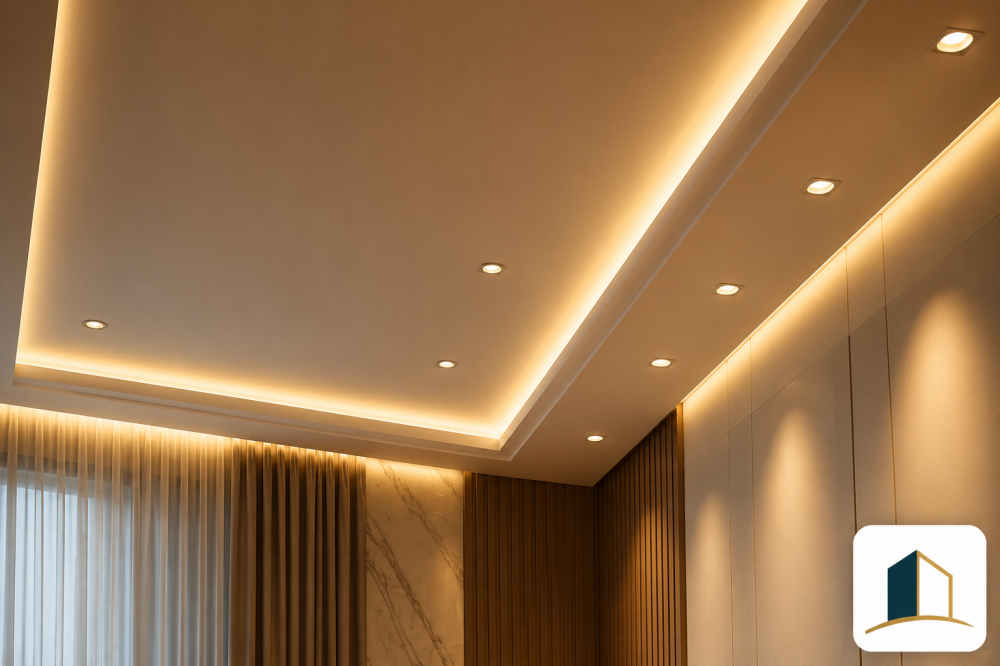
Surface LED lighting (also called "LED Over") refers to LED fixtures that mount directly onto the ceiling surface without a cavity cut into it. It combines low energy use, a modern look, and easy installation and maintenance, making it one of the most practical indoor lighting solutions for homes, offices, and shops.
Quick answer: "Over" (surface) means the unit is fixed on the visible ceiling surface, unlike recessed fixtures buried inside the gypsum board. That makes surface LED the ideal choice for concrete ceilings or spaces where a pre-cut cavity isn't practical.
What is surface LED lighting?
Surface LED is a spotlight or LED unit with a base screwed onto the ceiling face; its body sits relatively proud of the ceiling, unlike a recessed spotlight that hides inside it. These units include an LED chip and a diffuser that spreads light evenly and reduces glare and eye strain.
Surface LED vs. recessed (in-ceiling) LED
- Installation: Surface mounts directly on the ceiling; recessed needs a cavity inside the gypsum or false ceiling.
- Ceiling type: Surface is ideal for concrete/cement ceilings; recessed suits gypsum-board ceilings.
- Look: Recessed gives a flush, integrated look; surface is visible and can be a design feature in itself.
- Maintenance: Surface is easier and faster to service because the unit is within reach.
- Cost & time: Surface is cheaper and quicker to install since no pre-work is required.
Key benefits of surface LED lighting
- Energy savings: Uses far less power than traditional lamps for the same brightness.
- Long lifespan: Can run for tens of thousands of hours with almost no maintenance.
- Easy installation: No ceiling modification needed—great for renovations and finished buildings.
- Modern look: Slim, elegant designs that suit contemporary interiors.
- Comfortable light: Even light distribution reduces shadows and glare.
Types and shapes of surface LED units
- Round: The most common; suits most rooms and hallways.
- Square & rectangular: A modern geometric feel for offices and kitchens.
- Slim: Very low profile for an almost flush look.
- Tiltable: Directs light toward a wall, artwork, or specific area.
Color temperature: which one fits your space?
Warm white (2700–3000K)
Creates a calm, cozy mood—ideal for bedrooms, majlis, and relaxation areas.
Neutral white (3500–4500K)
A balanced tone close to daylight—perfect for living rooms and home offices.
Cool white (5000–6500K)
Bright, energetic light for kitchens, workspaces, shops, garages, and bathrooms.
How to choose the right surface LED (step by step)
- Define the space and use: A bedroom needs soft light; a kitchen needs higher brightness.
- Calculate required lumens: Larger areas or brighter needs require more total lumens.
- Pick the color temperature: Based on the room's function and the mood you want.
- Mind the beam angle: Wide for general lighting, narrow for accenting.
- Check quality: Choose units with a CRI of at least 80 from a trusted source.
Best places to use surface LED
- Concrete ceilings where recessed installation is difficult.
- Hallways, entrances, and staircases.
- Offices, shops, and showrooms.
- Kitchens, bathrooms, and garages.
- Renovations and lighting upgrades without breaking the ceiling.
Considerations and drawbacks to note
- Protrudes from the ceiling: Not as flush as recessed fixtures.
- Variable quality: Cheap units may not reach their claimed lifespan—choose trusted brands.
- Right wattage matters: The wrong power causes over- or under-lighting.
Frequently asked questions
Is surface LED better than recessed?
There's no absolute "better." Surface suits concrete ceilings, easy maintenance, and lower cost; recessed suits those who want a flush look with a gypsum-board ceiling.
How many lumens do I need for a room?
It depends on the area and the room's function; living rooms need more light than bedrooms. See our guide on calculating room lighting for an exact figure.
Can I install it myself?
Installation is fairly simple, but switch off the power and follow safety guidelines; a licensed technician is recommended for wiring.
Which color temperature is best for a bedroom?
Warm white (2700–3000K), because it creates a calm, comfortable atmosphere.
Conclusion
Surface LED lighting is a practical, economical, and elegant solution for most spaces—especially concrete ceilings and renovations. Choose the right wattage, color temperature, and quality, and you'll get comfortable, efficient light that lasts for years.
Shop surface LED lighting and LED units at tirtk Lighting & Electrical
Related: Explore our surface downlights and the full lighting collection at tirtk.